Continuity – the secret behind progress
Magnus Hasseleid
October 28, 2025The secret to maintaining fitness through fall and winter
When the big goals of autumn are behind you, the race is run and the medal has found its permanent place in the drawer, it’s easy to feel like your legs are happier on the couch than in your running shoes. Needing a breather is completely natural. But if your goal is to start 2026 with a light, springy stride rather than stiff “beginner legs,” there’s one word worth remembering: continuity.
It might sound boring, but continuity is the real superpower in running. Your body thrives on small, regular doses of training. When you expose it to steady load over time, it gradually adapts and builds endurance, strength, and resilience. Long breaks cause you to lose some of that progress. Not all of it, but enough that even short runs can feel heavier than they should. That’s why doing a little, often, works so much better than doing a lot, rarely. In fact, research shows that the first five days without running result in hardly any loss of fitness. After two weeks, you do start to lose a few percent of capacity, but even that is quick to regain as long as you find your way back in time.
Winter running that actually feels good
The dark season comes with its own challenges, but with a bit of planning, winter can become a period you actually look forward to. The key is making it comfortable enough that the mental hurdle doesn’t win. Layering works wonders: a thin base layer to move moisture away from the body, an insulating mid-layer, and an outer layer that protects against wind and weather. Add a hat, gloves, and a buff, and you may be surprised by how much more pleasant it is to head out, even on the coldest days.
Route planning can also be a small but effective trick. Plan your run so you start into the headwind and get a tailwind on the way home. That small luxury, when you’re sweaty and tired, can be exactly what makes you glad you went out. Surface choice matters too. Gravel roads and trails are kinder to your legs than asphalt, but in winter conditions, traction is key. Trail shoes, or studded shoes when it’s icy, allow you to run relaxed instead of tensing up your shoulders in fear of slipping.
When the treadmill becomes your friend
For many runners, it’s not the weather but the darkness that’s the biggest barrier. This is where the treadmill is often underestimated. It’s not a cheating machine, but rather a small training lab where you can precisely control pace, incline, and duration. Many also find that treadmill running is slightly easier on the joints than hard asphalt. To simulate outdoor conditions, you can set the incline to one percent, but it’s also perfectly fine to keep it flat. That makes sessions more comparable from run to run and from treadmill to treadmill. Variety is the key to avoiding monotony: add small progressions, short hill intervals, or fartlek to keep things interesting.
Build the engine with controlled intensity
If you want to use winter wisely, threshold training is one of the best cards you can play. Threshold pace is, in practice, the fastest speed you can hold for about an hour without tying up. Training at this intensity raises the speed you can sustain over longer periods, makes your body more efficient at using energy, and gives you more speed for a lower “cost” per kilometer. Best of all, these sessions don’t drain you in the same way as workouts where you push completely to the limit.
A classic example is four times eight minutes at a steady, controlled pace, with short recoveries in between. Alternatively, you can run 20 to 30 minutes continuously at the same intensity. The key is that it should feel hard, but not horrible. You should have something left in the tank, be able to speak in short sentences, and ideally feel like you could add another interval if you had to.
Variety that keeps you injury-free
Even the most dedicated runner can benefit from a break from running shoes now and then. Winter offers a golden opportunity to add training that both provides variety and builds a stronger body. Cross-country skiing is perhaps the most classic Nordic winter booster. It delivers a full-body workout, builds endurance, and trains muscles you barely knew you had. And yes, the hills you conquer on skis work wonders for your uphill running strength later on.
If you have access to a pool, aqua jogging is another gem. It gives you running-specific movement without the impact that often wears the body down the most. Perfect during recovery weeks or if you’re dealing with minor injuries. Strength training should not be underestimated either. Two short sessions per week with simple but effective exercises like squats, deadlifts, hip thrusts, and planks will make you more robust and improve running economy when spring arrives.
When motivation fades
Everyone goes through periods when the couch feels more tempting than a run. The trick is lowering the barrier. Make a deal with yourself that you’ll only go out for 15 minutes. If you feel good, you can always continue, and if not, you’ve still put a session in the bank. Variety helps here too: alternate between outdoor runs, treadmill sessions, and skiing so it never feels exactly the same. And plan your runs around the weather, it’s amazing how much nicer a run feels when you know you’ll have a tailwind all the way home.
Listen to your body
After a hard race or a week with extra volume, it’s wise to give your body a few easy days. Light activity like easy jogging, cycling, or swimming keeps circulation going without draining your energy reserves. Taking a short break or dialing down the intensity is not a defeat, it’s an investment in maintaining long-term continuity.
A final reminder
Continuity is not about running every day or training until you collapse. It’s about creating small, smart habits that last through the dark season. Two to three sessions per week, a bit of variety, some threshold work, and a little alternative training are all it takes to meet spring stronger than before.
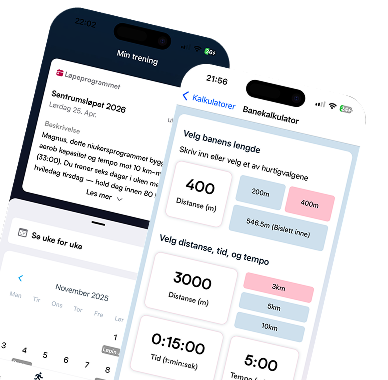
And remember, you’re not alone in this. PacePilot helps you find the right mix of running and alternative training, whether that means scheduling a structured treadmill workout, planning a relaxed ski session, or adding strength work. The coach helps you stay on course, even when winter tries to lure you back to the couch.